The philosophy of kingship asks why a society should have a monarch and what limits the monarch’s power. Answers have ranged from sacred father-figure and divine-right ruler to a contract-bound magistrate and, in Canada today, a constitutional head of state who reigns but does not govern.
What are the main theories of kingship?
| Theory | Core idea | Typical thinkers or texts |
|---|---|---|
| Sacral kingship | The king links people and the divine order | Ancient Near East, Egypt, early medieval Europe |
| Philosopher-king | The best ruler is wise, not merely strong | Plato, the Republic |
| Mixed and tempered monarchy | A king rules for the common good within law | Aristotle, Aquinas, John of Salisbury |
| Divine right | The king answers only to God | James VI and I, Robert Filmer, Bossuet |
| Contract and consent | Rule rests on agreement and can be lost | Hobbes, Locke, the Glorious Revolution |
| Constitutional monarchy | The Crown is a neutral symbol of the state | Walter Bagehot, Canada’s constitution |
The sacral king: father, priest and governor
In early societies the ruler was often more than a chief. Anthropologists and historians describe a sacral king who stood between the people and their gods, who guaranteed good harvests and order, and who was both leader in war and protector of the weak. Writers who study the origins of royalty have noted three functions that recur: the king as father-figure, as priest, and as governor. Many later royal rituals, from anointing to the touching of the sick, grow from that triple role.
Echoes survive in modern ceremonies. The oil poured at a coronation, the oath sworn on the Bible and the crown placed on the head are all relics of sacral kingship. The reading on King David and Joan of Arc shows two famous cases, and royal pageantry describes how the ceremonies work today.
Plato, Aristotle and the good king
Greek thinkers asked a different question: who deserves to rule? Plato argued in the Republic that cities would not be well governed until philosophers became kings or kings philosophers. Aristotle, in the Politics, distinguished the good forms of rule, where one, a few or many govern for the common good, from the bad ones, where rulers serve only themselves. A king who ruled for the common good was a kingship; a king who ruled for his own benefit was a tyrant.
That distinction travelled into the Christian Middle Ages. John of Salisbury, writing in 1159, held that a prince was a minister of the common good and that a tyrant could be resisted. Thomas Aquinas, in his work on kingship from about 1267, favoured monarchy as the form most likely to produce unity, while stressing that the king must serve justice. The idea of a “well-tempered” monarch who respects law lay behind Magna Carta, sealed by King John in 1215, and the growth of Parliament. The treatment of royal education, which these thinkers also addressed, is the subject of the education of princes.
Divine right and its critics
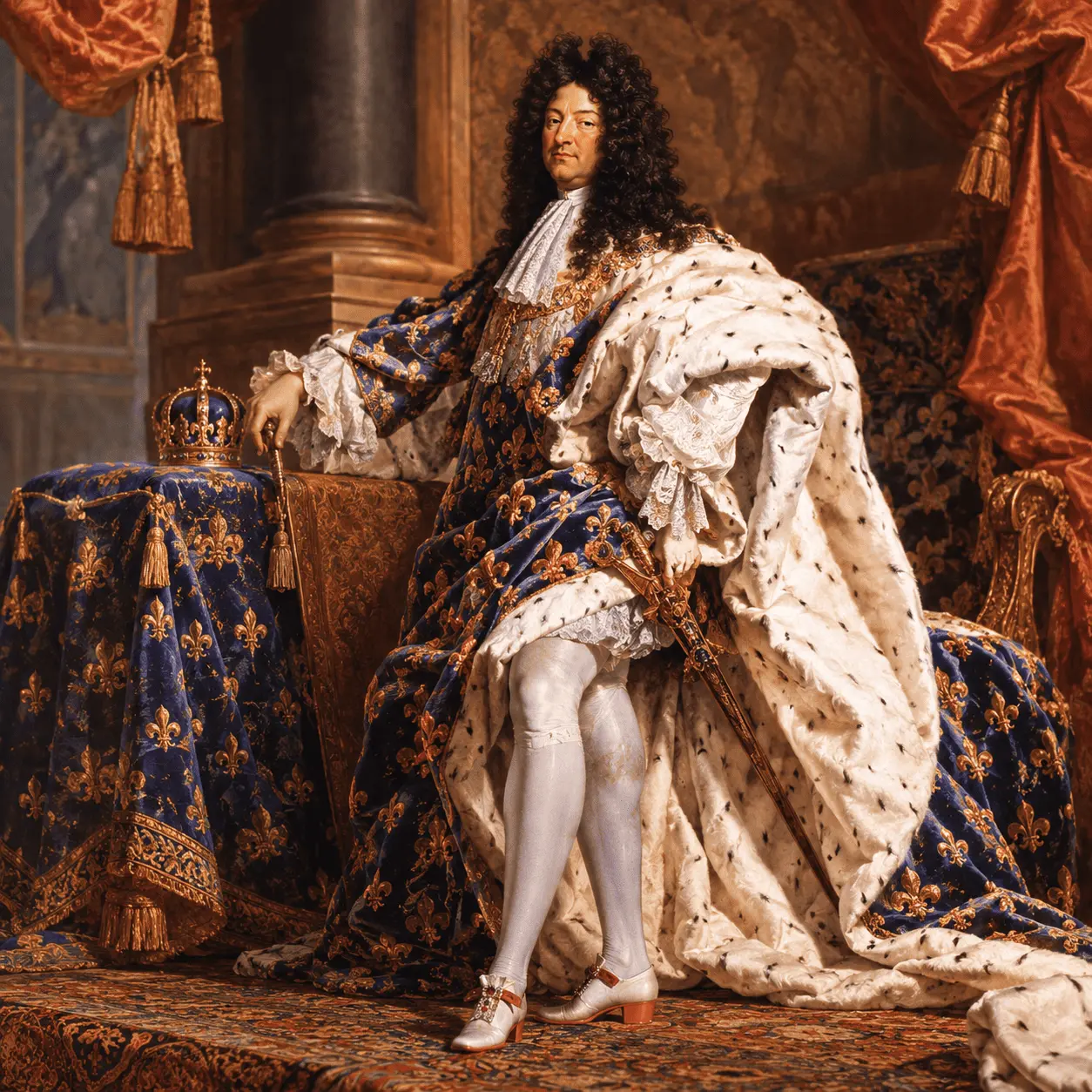
In the 16th and 17th centuries, as rivals disputed religious authority, some writers claimed that kings held power directly from God. James VI of Scotland, later James I of England, argued this in The True Law of Free Monarchies in 1598. Sir Robert Filmer, in Patriarcha, written before the Civil Wars and published in 1680, compared the king to a father whose authority was natural and inherited. In France, Bishop Bossuet stated a similar case for Louis XIV.
The reaction was sharp. Thomas Hobbes built a case for strong government on a social contract in Leviathan in 1651, though he did not need divine right to do so. John Locke’s Two Treatises of Government, published in 1689, argued that government rests on the consent of the governed and that a ruler who breaks the trust can be removed. England had by then beheaded one king, Charles I, in 1649, and expelled another, James II, in 1688. The Bill of Rights of 1689 settled the question in practice: the Crown would rule through Parliament.
The constitutional Crown
The modern form of the theory is much quieter. In The English Constitution, published in 1867, Walter Bagehot distinguished the “dignified” parts of government, which win loyalty, from the “efficient” parts, which do the work. The monarch belonged chiefly to the first category. Bagehot also described the sovereign’s three rights: to be consulted, to encourage and to warn.
This formula is the basis of the monarchy in Canada. Under the Constitution Act, 1867, executive power is vested in the sovereign, but it is exercised through ministers who answer to the House of Commons. The Governor General acts for the King and, by convention, on ministerial advice, except in rare cases where the reserve powers apply. The roles are laid out in the overview of the facts about the Canadian monarchy and in the page on the sovereign’s representatives.
Canadian answers to an old question
Canada has had its own debates. Constitutional scholar Eugene Forsey argued throughout his career that the Crown was a safeguard for democracy and a source of continuity, a view honoured in the Eugene Forsey Prize. Others have argued that a hereditary head of state does not fit a modern, plural country. The arguments on both sides are summarised on the page about the monarchy debate, and common misunderstandings are addressed in the myths about the Canadian Crown.
Canada’s Crown has also been a vehicle for treaty relationships. The Royal Proclamation of 1763 and the numbered treaties of the 1870s were agreements made in the name of the Crown, and Indigenous nations often speak of obligations that run to the sovereign. Such obligations show that the old idea of a king’s duty of protection has not vanished; it has been renewed in a new setting. The relationship between Crown and country is explored further in the Crown’s independence.
Related reading:
Frequently asked questions
What is divine right of kings?
It is the doctrine that a monarch’s authority comes directly from God and cannot be challenged by subjects. It was influential in 17th-century Europe, and ended in Britain after 1688.
Did Plato support monarchy?
He favoured rule by the wisest person, whether called king or guardian. His ideal in the Republic was a philosopher-king, though in later works he accepted rule under law as a second-best.
Does the Canadian monarch have real power?
The King holds legal authority, but it is exercised by ministers responsible to Parliament. The Crown’s own reserve powers are limited to rare constitutional emergencies.
Why do monarchies survive in democracies?
Supporters point to continuity, neutrality above party politics and the symbolic unity of a head of state who is not elected. Critics prefer elected heads of state.
Sources and further reading
- Divine right of kings (Wikipedia)
- The English Constitution (Wikipedia)
- Constitution Act, 1867 (Wikipedia)
- Monarchy of Canada (Wikipedia)
- Eugene Forsey (The Canadian Encyclopedia)
Last reviewed: November 2026