The monarchy of Canada is the country’s constitutional monarchy: a hereditary sovereign, today King Charles III, is head of state, while elected governments make the decisions. The King is represented in Ottawa by the Governor General, currently Louise Arbour, and in each province by a lieutenant governor.
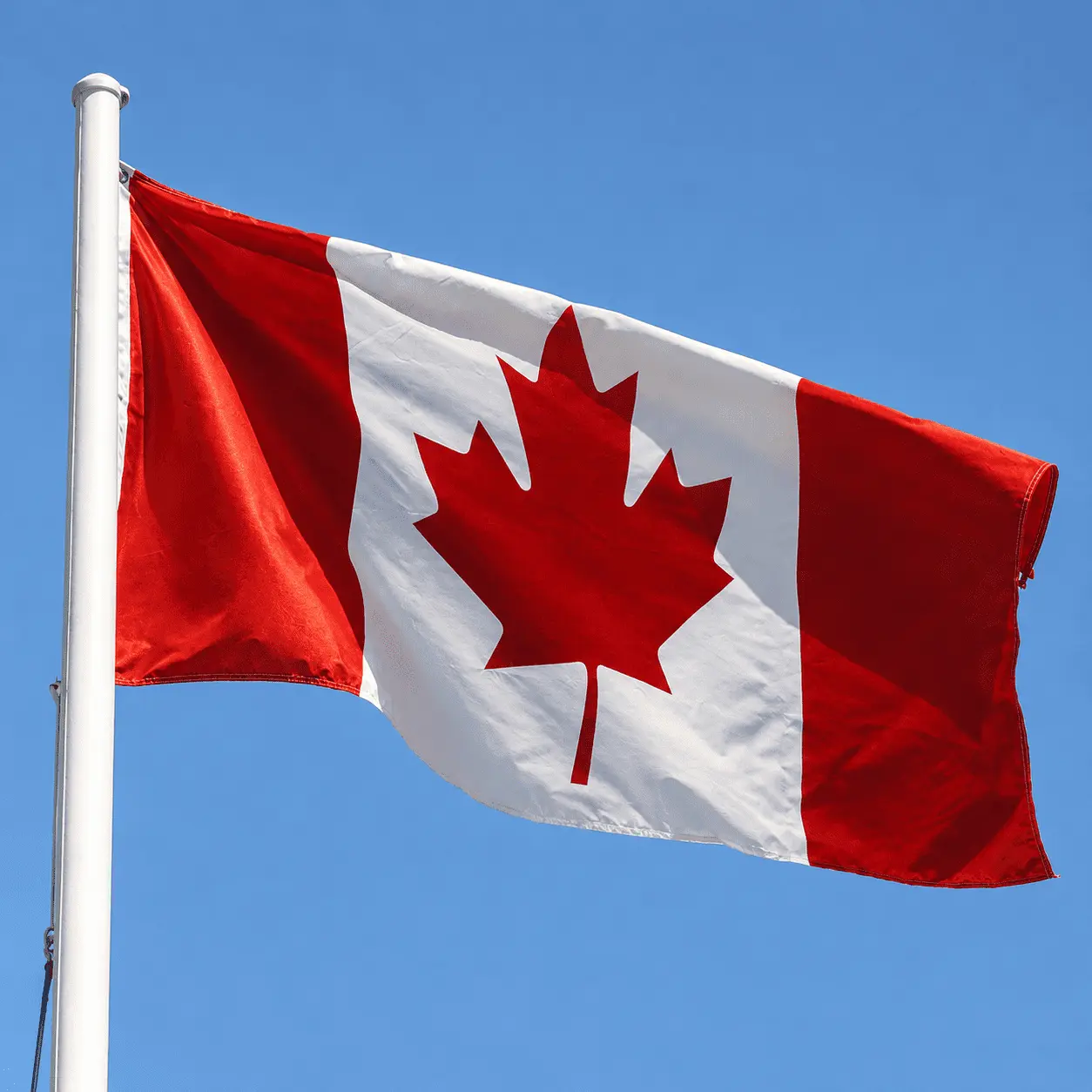
Canada’s monarchy at a glance
| Question | Answer in November 2026 |
|---|---|
| Who is the monarch? | King Charles III, who has reigned since 8 September 2022 |
| Official title in Canada | Charles the Third, by the Grace of God King of Canada and His other Realms and Territories, Head of the Commonwealth |
| Who is next in line? | William, Prince of Wales, then his son Prince George |
| Governor General | Louise Arbour, the 31st, installed 8 June 2026 |
| Prime Minister | Mark Carney |
| Form of government | Federal parliamentary democracy under a constitutional monarchy |
| Other countries with the same monarch | Fourteen, for fifteen realms in all |
What does it mean that Canada is a constitutional monarchy?
Two words carry the meaning. “Monarchy” says that the head of state is a person who holds the office by birth and succession rather than by election. “Constitutional” says that the person’s powers are set and limited by law and by long-standing convention.
In practice the King reigns and ministers govern. Laws are made by Parliament, which Canadians elect, and the government stays in office only while it holds the confidence of the House of Commons. The Crown supplies something different: a single, permanent source of legal authority that does not belong to any party or any prime minister. Soldiers, judges, police officers and public servants serve the Crown, not whichever party happens to be in power.
Section 9 of the Constitution Act, 1867 states that executive government and authority in Canada continue and are vested in the sovereign. Section 17 says Parliament consists of the sovereign, the Senate and the House of Commons. That is why a bill becomes law only after Royal Assent, and why the Speech from the Throne opens each new session.
Who is the King of Canada?
Charles III became King the moment Queen Elizabeth II died on 8 September 2022. No ceremony is needed for that: succession in Canada is automatic and immediate. He was crowned in Westminster Abbey on 6 May 2023, but the coronation confirmed a reign that had already begun.
He is King of Canada in his own right, a separate legal office from King of the United Kingdom, even though the same person holds both. Under the Royal Style and Titles Act, 2023 and a proclamation of 8 January 2024, his Canadian title is “Charles the Third, by the Grace of God King of Canada and His other Realms and Territories, Head of the Commonwealth.” The older phrase “Defender of the Faith” does not appear in that wording.
The King and Queen Camilla made their first visit to Canada since the accession on 26 and 27 May 2025. In Ottawa the King read the Speech from the Throne to open the 45th Parliament, the first time a monarch had done so since 1977.
What does the King actually do?
Most of the sovereign’s work is done on his behalf by the Governor General, acting on the advice of ministers. The King keeps a few functions himself, chiefly appointing the Governor General on the prime minister’s recommendation.
The Crown’s tasks fall into a few groups:
- Legislative: summoning and proroguing Parliament, dissolving the House of Commons for an election, and granting Royal Assent to bills.
- Executive: appointing the prime minister, who by convention is the person able to command the confidence of the House, and appointing ministers, judges and senators on advice.
- Military: the King is commander-in-chief of the Canadian Armed Forces, a role the Governor General exercises day to day. Officers and soldiers are commissioned in the Crown’s name.
- Honours and symbols: the Order of Canada and the other national honours are granted in the sovereign’s name, and the Crown appears in the arms of Canada, on coins, on the oath of citizenship and in the many “Royal” bodies, from the Royal Canadian Mounted Police to the Royal Canadian Mint.
Discretion is rare and tightly bounded. The reserve powers, such as refusing a dissolution or choosing a prime minister after an inconclusive election, matter only in a political crisis, and their use is judged by precedent. The article on the facts about Canada’s monarchy goes through those constitutional details one by one.
How do the Governor General and lieutenant governors fit in?
The Governor General is the King’s personal representative for Canada as a whole. Louise Arbour, a former justice of the Supreme Court of Canada and UN human rights chief, took the oaths on 8 June 2026 in the Senate chamber, succeeding Mary Simon, who held the office from 26 July 2021. The Governor General is also chancellor of the Order of Canada and presents honours across the country.
Each province has its own lieutenant governor, who plays the same role at provincial level: reading the throne speech, giving assent to provincial bills, swearing in premiers. The three territories have commissioners who represent the federal government. The full roll call is on the page about the current representatives of the Crown, and the long line of past holders is covered in the history of Canada’s viceroys.
Where did the Canadian monarchy come from?
The Canadian Crown did not begin in 1867. French and English kings claimed and governed parts of North America from the late fifteenth and sixteenth centuries, and the 1763 Treaty of Paris placed most of the former New France under King George III. Confederation in 1867 created a federal state with a monarch at its head, and the Statute of Westminster in 1931 made the Dominion’s Crown legally equal to, and separate from, that of the United Kingdom.
Treaties between the Crown and Indigenous nations, beginning with the Royal Proclamation of 1763 and the numbered treaties of the later nineteenth century, form another strand. They are still the basis of important legal relationships today. For the step-by-step story, read the monarchy and Canadian independence and the list of the sovereigns of Canada.
How is the monarchy debated in 2026?
The institution has critics and defenders, and polls show a shift. An Angus Reid Institute survey of 1,607 adults, taken from 24 to 26 February 2026, found 47 per cent preferring to end the constitutional monarchy and 29 per cent wanting it to continue for generations (the rest were unsure); 42 per cent supported recognizing Charles as head of state and 48 per cent opposed it. The same survey found 84 per cent in favour of removing Andrew Mountbatten-Windsor from the line of succession. Question wording matters a great deal, so treat any single poll with care.
Defenders point to a head of state who is above politics and to continuity of institutions. Critics argue that an inherited office does not fit a modern democracy. Changing the monarchy itself is hard: under section 41 of the Constitution Act, 1982, altering the office of the King, the Governor General or the lieutenant governors needs the consent of the Senate, the House of Commons and every provincial legislature. The arguments are laid out on the page about the monarchy debate, and the common myths are worth checking before forming a view.
Frequently asked questions
Is Canada a monarchy or a republic?
Canada is a monarchy. The head of state is the King, and the head of government is the prime minister, who is chosen through elections to the House of Commons.
Is the King of Canada the same person as the King of the United Kingdom?
Yes, the person is the same, but the offices are legally distinct. When he acts for Canada he does so on the advice of Canadian ministers only, and Canada’s laws govern the Canadian Crown.
Does the King run the Canadian government?
No. Ministers, answerable to the elected House of Commons, run the government. The King and Governor General perform formal duties such as Royal Assent and opening Parliament.
Who pays for the monarchy in Canada?
Canadian public funds cover the offices of the Governor General and the lieutenant governors, and the costs of royal visits when they take place.
Can Canada change its monarchy on its own?
Not quickly. Any change to the monarch’s office needs resolutions from the Senate, the House of Commons and all ten provincial legislatures, and Canada’s own law, not British law, governs that process.
Last reviewed: November 2026
Sources and further reading
- The Crown in Canada, Canadian Heritage
- Viceregal representatives, Governor General of Canada
- Louise Arbour is the 31st Governor General
- Proclamation Establishing for Canada the Royal Style and Titles, Justice Laws
- Monarchy of Canada, Wikipedia
- 2025 royal visit to Canada, Wikipedia
In this section
The Royal Family and the Canadian Armed Forces
Command-in-chief, oaths, royal colonels-in-chief and two centuries of royal service: how the Crown and Canada's military are tied in law
Read more →Is Canada's Monarchy the Same as the British Monarchy?
A single person is King of Canada and King of the United Kingdom, but the two Crowns are legally separate; here is how the Canadian Crown works
Read more →Support for the Monarchy in Canada: Polls 2022 to 2026
Compare Angus Reid, Research Co., Ipsos, Leger and Pollara results, with trends since 2002, regional and age gaps and why wording moves numbers
Read more →Royal Flags of Canada: King, Governor General and Union Jack
Which flag shows the King is in Canada? See the Sovereign's Flag, Governor General's and lieutenant governors' flags, Union Jack rules and half-masting
Read more →The Crown, Canada and the Commonwealth of Nations
Why King Charles III is Head of the Commonwealth, how the post differs from being King of Canada, and Canada's part in the 56-nation association
Read more →The 15 Commonwealth Realms and How Canada Compares
Fifteen countries share one monarch but have separate crowns. See the full list, how a realm differs from the Commonwealth and where Canada fits in
Read more →Forming Government in Canada: Confidence and Minorities
The Governor General asks whoever can win the confidence of the House of Commons to govern. See how minorities, caretaker rules and past crises work
Read more →The Constitution Act, 1867 and the Crown in Canada
What the Act says about the sovereign, the Governor General, Royal Assent and disallowance, and how the 1982 formula protects the Crown
Read more →The Crown and Indigenous Peoples: Treaties and Relations
Treaties, the Royal Proclamation, the honour of the Crown and the duty to consult explained, plus the differing Indigenous views on the Crown today
Read more →Crown Corporations in Canada: Meaning, Examples and Role
What makes a company a Crown corporation, how the CBC, Canada Post and the Mint differ from departments, and how Parliament keeps them accountable
Read more →What Is the Crown in Canada? Crown in Right of Canada
The Crown is the legal form of the state, not just the King. See how federal and provincial Crowns work, plus Crown attorneys, corporations and land
Read more →Crown Land in Canada: What It Is and Who Owns It
Most of Canada is Crown land. Learn who controls it, how federal and provincial shares differ, and what you can do on it, such as camping
Read more →Should Canada Abolish the Monarchy? The Republic Debate
Arguments for and against a Canadian republic, how abolition could happen under the constitution, and where recent opinion polls stand in late 2026
Read more →What Happens When the Monarch Dies in Canada
Succession in Canada is instant and automatic. See how the Crown passes to the heir, how accession is proclaimed, and what happened in September 2022
Read more →Facts About the Canadian Monarchy and the Crown
Verified facts on the King of Canada, the Crown, the constitution, succession, oaths and royal symbols, checked against official sources for 2026
Read more →Governor General Powers: Duties, Reserve Powers, Limits
What can the Governor General actually do? Review constitutional duties, the reserve powers, famous cases from 1926 to 2025 and the conventions that apply
Read more →Governor in Council in Canada: Meaning and Powers
See how cabinet decisions become legal acts through orders in council: appointments, regulations, the Privy Council Office and how to look one up
Read more →Who Is Canada's Head of State? King and Governor General
Canada's monarch is the head of state, while the Prime Minister runs the government. Learn how the roles split, who represents the King and why it matters
Read more →Canada's Honours System: How the Crown Recognizes Merit
How Canada awards national orders, bravery decorations and medals in the Sovereign's name, who decides, and how an ordinary person can nominate someone
Read more →Can Canada Abolish the Monarchy? The Amending Formula
Ending the monarchy means changing the Constitution with unanimous consent. See what section 41 requires, what courts said, current polls and global cases
Read more →How to Address and Greet the King: Canadian Protocol
Say Your Majesty first, then Sir. Correct forms for the King, Queen and Prince of Wales, whether you must bow, and how to address the Governor General
Read more →How Canada Became Independent and Kept the Crown
From the Balfour Declaration to patriation in 1982, see how Canada gained full independence while remaining a monarchy, with the key dates and laws
Read more →King Charles III and Canada: Role, Visits and Ties
He became King of Canada on 8 September 2022. A guide to his constitutional role, 20 visits, military and honours links, and the Prince of Wales
Read more →King Charles on Canadian Coins and Stamps
Where King Charles III appears on Canadian money and mail: the left-facing coin effigy by Steven Rosati, the 2023 stamp and the new $20 note due in 2027
Read more →King's Counsel Canada: What the KC Designation Means
Who may use KC after a name, which provinces still appoint King's Counsel as of November 2026, how QC changed and why Ontario and Quebec differ
Read more →King's Privy Council for Canada: Who Belongs and Why
Membership for life, the switch from Queen's to King's, how councillors are sworn in and who earns the Right Honourable style, plus cabinet versus council
Read more →Lieutenant Governors of Canada: Role and Provincial List
Each province has a Crown representative. See what these viceroys do, how the Governor General appoints them, and who holds each post in 2026
Read more →Line of Succession to the Canadian Throne in 2026
Prince William is first in line to the King's throne, then Prince George and Princess Charlotte. See the order, Canada's rules and the Andrew debate
Read more →List of Governors General of Canada Since 1867
From Lord Monck to Louise Arbour, every viceroy of Canada in one table, plus how appointments work, milestones, firsts and the longest and shortest terms
Read more →How Much Does the Monarchy Cost Canada Each Year?
Official figures for the Governor General's office and royal visits, why one total is hard to give, and how campaigners' totals differ from accounts
Read more →Common Myths About the Monarchy in Canada, Checked
Is the King a foreigner? Who is head of state? Can Parliament abolish the Crown? Eight popular claims about Canada's monarchy tested against the law
Read more →Canada's Oath of Allegiance to the King, Explained
New citizens, MPs and judges swear loyalty to the King, his heirs and successors. Read the exact wording, the affirmation option and the court rulings
Read more →The Order of Canada: Levels, Nomination and Recipients
Learn how the Order of Canada works, from its three levels and yearly limits to the nomination process, the Advisory Council and how membership can end
Read more →Prince of Wales and Canada: William's Role and Visits
Heir to the Canadian throne since 2022, William toured Canada in 2011 and 2016. See his titles, family, place in the line of succession and any 2026 plans
Read more →Prorogation and Dissolution of Parliament in Canada
What prorogation means, how it differs from dissolution, who decides, and the cases that tested it, from 1873 and 1926 to 2008, 2020 and 2025
Read more →Queen Camilla in Canada: Her Title, Role and Visits
Is Camilla Queen of Canada? How Canadian sources style the King's wife, her six visits since 2009, her Privy Council seat and Canadian regiment
Read more →Elizabeth II, Queen of Canada: Her Life and Reign
From a princess who never expected the Crown to a monarch of 70 years: her life, 22 Canadian visits, her death in 2022 and Canada's mourning
Read more →The King, His Heir and Canada's Viceregal Representatives
Who holds each royal office in Canada today: the King, the Prince of Wales, the Governor General, ten lieutenant governors and territorial commissioners
Read more →Royal Assent in Canada: How a Bill Becomes Law
Every federal bill needs Royal Assent before it becomes law. Follow the steps, the Senate ceremony, written declarations and the rare cases of refusal
Read more →Royal Coat of Arms of Canada: Meaning of Each Element
Read the shield, lion, unicorn, crest and motto of Canada's arms piece by piece, with the 1921, 1957 and 1994 changes and the rules on who may use them
Read more →What Is a Royal Commission in Canada? How Inquiries Work
How Cabinet creates a royal commission under the Inquiries Act, why it is called royal, how it differs from a public inquiry and key reports since 1937
Read more →King Charles III's Cypher and the Canadian Royal Crown
How the King's CIIIR monogram reached Canada, why a Canadian version of the Royal Crown followed in 2023 and where both appear on badges and insignia
Read more →Places and Institutions Named After Royals in Canada
Why Regina, Victoria, Alberta and Prince Edward Island carry royal names, how the title Royal is granted, and which names were dropped or changed
Read more →Royal Names in the Canadian Armed Forces: Navy, Air Force
Why Canada's navy and air force are 'Royal', how the 1968 merger removed the names and 2011 brought them back, plus royal colonels-in-chief of regiments
Read more →Royal Prerogative in Canada: Powers Used in the King's Name
Treaties, war, honours and passports rest on Crown prerogative. See who really exercises it, what courts may review and where statutes step in
Read more →Rideau Hall and La Citadelle: Royal Residences in Canada
Where the King stays when in Canada: the history of Rideau Hall in Ottawa and the Citadelle in Quebec City, plus tours, grounds and public access
Read more →The King's Title in Canada: Royal Style and Titles
How the Sovereign's Canadian title evolved from 1867 to the Royal Style and Titles Act, 2023, what the King is called today and how to address him
Read more →Royal Symbols of Canada: Crown, Arms, Cypher and Flags
A guide to the symbols of the Canadian Crown, from the 2023 Canadian Royal Crown and the King's personal flag to the crown badges of police and military
Read more →King Charles III's 2025 Visit to Ottawa and Throne Speech
Two days in May 2025 put the monarch on Parliament Hill for the first time in 48 years. Itinerary, ceremony, who wrote the speech and the reaction
Read more →Royal Visits to Canada: A Timeline From 1786 to Today
From a naval prince in 1786 to the 2025 Ottawa visit, this timeline covers landmark tours, what a royal tour involves and how visits are paid for
Read more →The Sovereigns of Canada From Cabot to Charles III
Which kings and queens have reigned over Canada? A dated list of French, English and British monarchs and the key Canadian events of each reign, to 2026
Read more →What Is the Speech from the Throne in Canada?
A guide to the throne speech: who reads it, what it says, the Senate ceremony, the Address in Reply debate and how it differs from the federal budget
Read more →Is There a Canadian Law of Succession to the Throne?
British rules, a Canadian act of 1937 and the Succession to the Throne Act, 2013: who may change the law of succession and how the courts have ruled
Read more →Succession to the Throne: Rules and Canada's Line
Who is next after King Charles III? The current order, the 2013 reforms and how Canada assented through the Succession to the Throne Act, 2013
Read more →History of the Monarchy in Canada: A Timeline of Key Dates
Follow the Crown in Canada from Cartier's 1534 claim for France to Confederation, patriation and King Charles III, with dated milestones in one table
Read more →Viceroys of Canada: Every Governor General Since 1867
Canada's 31 governors general in order, from Viscount Monck in 1867 to Louise Arbour in 2026, with dates, firsts and notable moments in the office
Read more →Victoria Day in Canada: Origins, Date and Meaning
The Monday before May 25 honours a queen born in 1819. Date rule, upcoming dates, 1845 origins, the sovereign's birthday and Quebec's Patriots' Day
Read more →